
Valiant Wings Publishing | Airframe Detail No. 11: The Fairey Battle
Reviewed by Kevin Futter
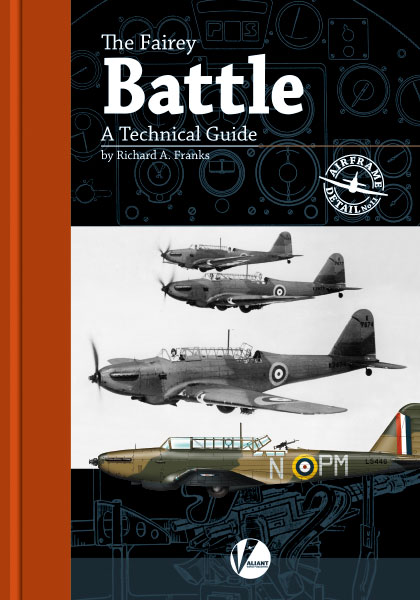
UK-based publisher Valiant Wings Publishing has just released the eleventh volume in its Airframe Detail series, covering the Fairey Battle. Entitled The Fairey Battle: A Technical Guide, this 138-page volume is authored by series editor Richard Franks, and illustrated by Richard J. Caruana.
Following the usual format for this series, the book consists of only three main sections, plus an introduction and appendices:
- Technical Description
- Camouflage & Markings
- Battle Build
The appendices feature a run down of available kits and accessories, as well as a concise bibliography on the type. Let's take a closer look at each section.
Introduction
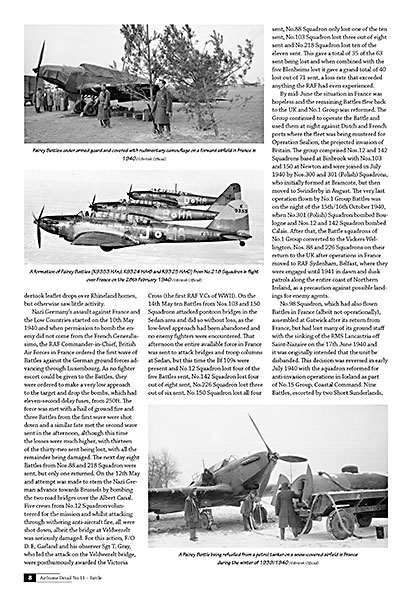
While not listed as one of the major sections in the book's contents, the Introduction consists of a substantial 27-page history of the type, copiously illustrated with captioned photographs. Its operational service is covered, including a brief description of each of the Operational Training Units the Battle served in, as well as its roles in gunnery training and as a night fighter. Even the airframes used as engine testbeds are covered!
A comprehensive listing of Fairey Battle serial numbers is given at the end of the chapter, including those used by foreign air forces.
Technical Description
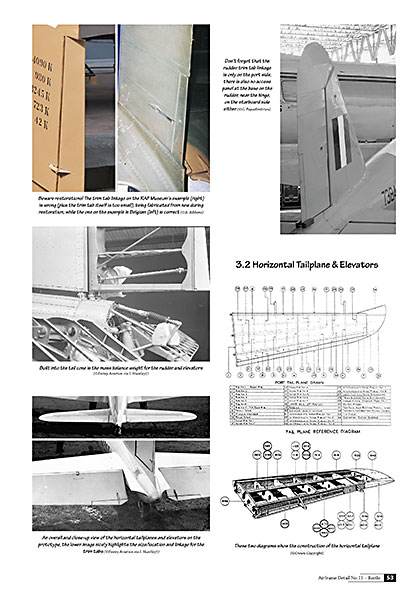
This is the longest section of the book, clocking in at 47 pages. The content is a mix of original factory drawings, period photographs, and close-ups of preserved examples. Eight distinct areas are covered:
- Engine, Cowlings & Propeller
- Fuselage, Cockpit Interior & Canopy
- Tail
- Wings & Controls
- Undercarriage
- Fuel, Oil, Coolant, Hydraulic & Oxygen Systems
- Armament & Orndance
- Miscellaneous
Camouflage & Markings
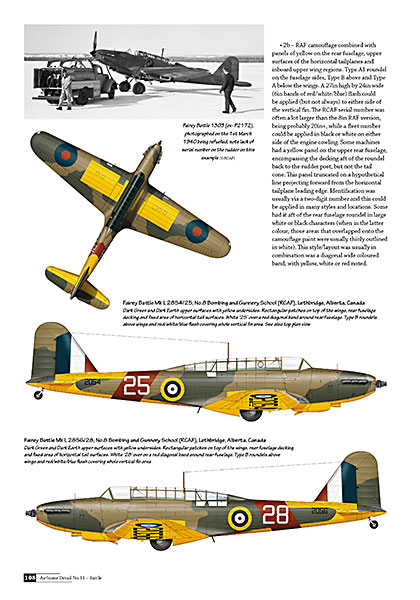
This section comprises 37 pages, and makes heavy use of period photos. The colour profiles by Richard Caruana are placed throughout the text. A smattering of foreign colour schemes is also included, if you're looking for something different.
Battle Builds
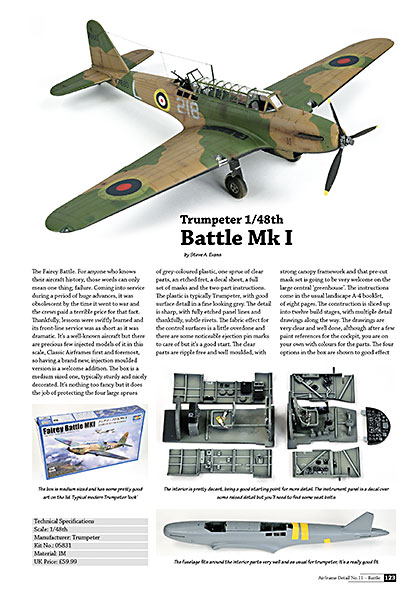
In this section, Libor Jekl tackles the Azur-Frrom 1/72 Battle Mk I kit, while Steve Evans builds the less convincing Trumpeter 1/48 scale kit. The resulting models are predictably excellent, but does make me yearn for an injection-moulded kit of the type in 1/32 scale!
Appendices
The four appendices occupy the last nine pages of the book. The first two appendices cover known kits, accessories, and decals, most of which are obviously in 1/72 scale and 1/48 scale. The only kit produced in 1/32 scale (or larger) that I know of is the Combat Models vacuform kit, which of course is listed. Oddly, some of the content for this section on Page 129 is repeated in a revised form on Page 130—possibly the remnant of a pre-production draft that has slipped through.
Appendix iii is a brief bibliography, which is a handy adjunct for those doing deep research into the type.
The Appendix iv, labelled Battle Squadrons, gives a rundown of all squadrons that operated the Fairey Battle, including experimental and testing operations.
This small selection of sample pages, courtesy of Valiant Wings, should give an indication of the nature of the contents:
Conclusion
This is a very good one-stop technical reference for the much-maligned Fairey Battle. The type's frontline operational history was limited, but it's still an important type in the catalogue of British aircraft of WW2. And as a self-proclaimed Technical Guide, this book's detail coverage of the areas commonly of interest to modellers (cockpit, wheel bays, engine) is as good as it can be for a relatively obscure type, and on that basis alone I can heartily recommend this book.
Thanks to Valiant Wings Publishing for the review sample.
© Kevin Futter 2026
This review was published on Tuesday, February 10 2026; Last modified on Tuesday, February 10 2026